 EuclidzEuclidz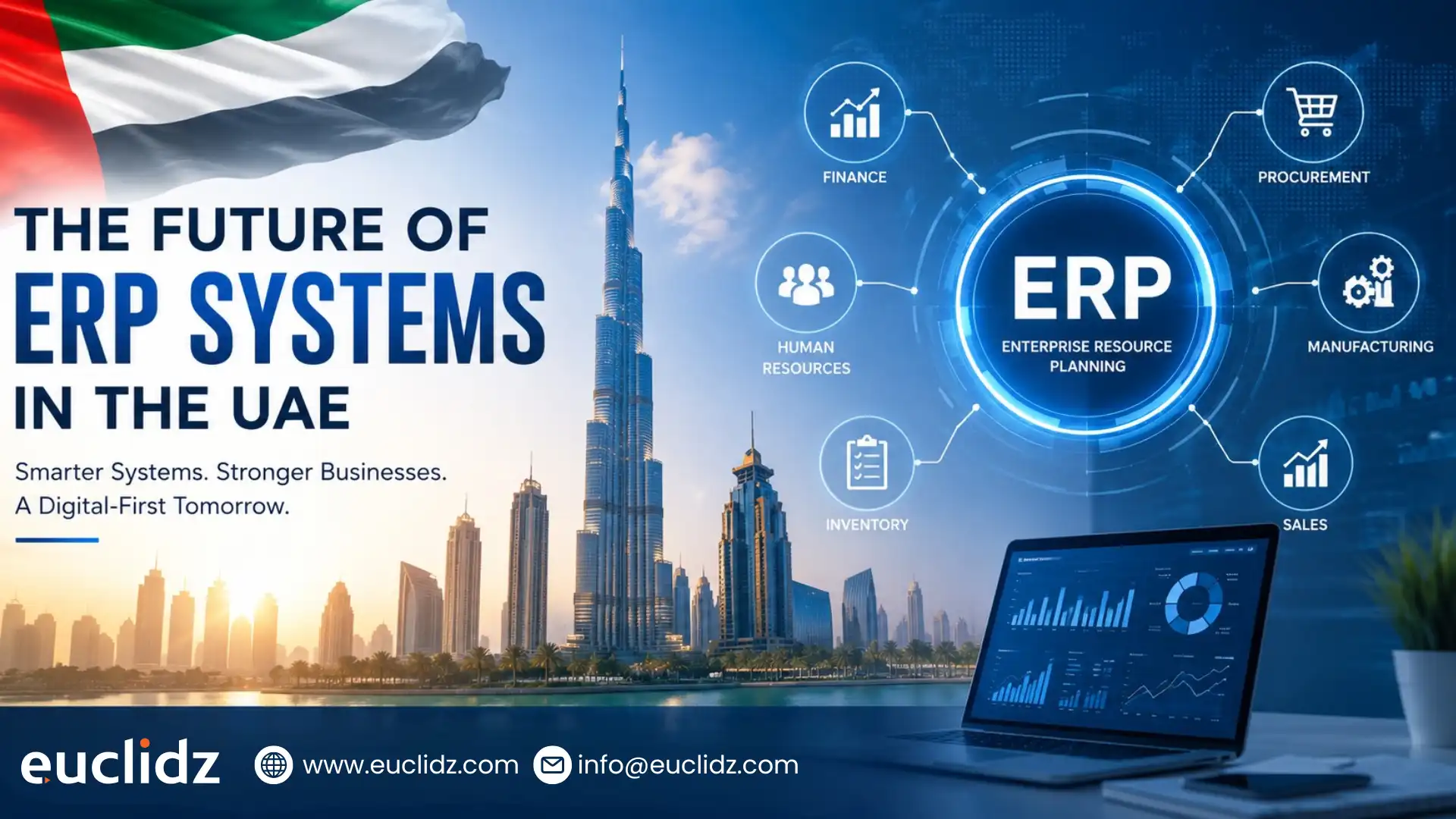
Enterprise Resource Planning software has become a core technology for organizations seeking greater efficiency, visibility, and control.
As the UAE accelerates digital transformation initiatives, businesses are investing in modern ERP platforms that support automation, data-driven decisions, and scalable growth.
The future of ERP Systems in UAE is closely linked to cloud computing, artificial intelligence, analytics, and industry-specific innovation.
Organizations that adopt advanced ERP solutions early can improve productivity, reduce operational costs, and respond faster to market changes.
This article explores the technologies, trends, benefits, and opportunities shaping the next generation of ERP software in the UAE.
The UAE has established itself as one of the most technology-driven economies in the Middle East.
Government-led digital initiatives, smart city projects, growing startup ecosystems, and increasing competition are encouraging organizations to modernize operations.
Traditional systems often create data silos, manual workflows, and reporting delays.
Modern ERP software solves these challenges by connecting departments through a centralized platform.
Finance, procurement, inventory, HR, sales, and operations can access real-time information from a single source.
Businesses gain:
Companies across manufacturing, construction, retail, healthcare, and logistics are moving away from disconnected applications toward integrated ERP ecosystems.
As organizations continue expanding locally and internationally, ERP platforms provide the scalability needed to manage increasing operational complexity.
The future business landscape in the UAE will depend heavily on technology-driven efficiency, making ERP adoption a strategic priority rather than an optional investment.
ERP systems are evolving rapidly due to advances in cloud infrastructure, artificial intelligence, automation, and data analytics.
These technologies are transforming ERP from a record-keeping platform into an intelligent business management system.
Organizations can automate repetitive processes, gain predictive insights, and improve operational performance through connected digital ecosystems.
Future ERP platforms will focus on agility, accessibility, and intelligent decision support.
Businesses will increasingly adopt ERP solutions capable of learning from data, identifying patterns, and recommending actions.
The result is faster execution, better forecasting, and stronger competitiveness.
Artificial intelligence is changing how ERP systems operate.
Instead of simply recording transactions, AI-powered ERP platforms analyze large volumes of business data and identify trends automatically.
Organizations can automate tasks such as:
AI also improves forecasting accuracy.
Businesses can predict demand fluctuations, identify operational risks, and optimize resource allocation.
Machine learning capabilities continue improving over time, making ERP systems smarter as more data becomes available.
This shift allows employees to focus on strategic activities rather than repetitive administrative tasks.
Cloud ERP is becoming the preferred deployment model for UAE businesses.
Unlike traditional on-premise systems, cloud ERP offers flexibility, scalability, and lower infrastructure costs.
Key advantages include:
As hybrid work environments become common, cloud ERP enables employees to access business data securely from any location.
Cloud platforms also support easier integration with third-party applications, creating a more connected business environment.
Many organizations are accelerating cloud migration projects to support future growth and innovation.
Modern ERP systems increasingly include advanced analytics capabilities.
These tools convert business data into actionable insights.
Organizations can monitor:
Predictive analytics helps leaders anticipate future outcomes rather than react to past events.
Businesses gain greater confidence when making investment, staffing, procurement, and expansion decisions.
The combination of ERP and analytics creates a stronger foundation for long-term strategic planning.
ERP adoption is expanding across multiple industries because businesses require solutions tailored to operational requirements.
Industry-specific ERP platforms deliver specialized workflows, reports, and compliance features.
Organizations benefit from faster implementation and improved user adoption.
Manufacturers use ERP systems to improve production planning, inventory management, quality control, and procurement.
Modern ERP platforms support:
These capabilities help manufacturers improve efficiency while reducing waste and operational costs.
Construction companies face challenges related to project management, budgeting, workforce coordination, and procurement.
ERP software provides real-time visibility across projects.
Businesses can track:
This improves profitability and project delivery performance.
Retail businesses require accurate inventory management and customer insights.
ERP platforms connect sales channels, warehouses, suppliers, and finance departments.
Benefits include:
As online shopping continues growing, ERP becomes increasingly important for operational efficiency.
Logistics companies depend on accurate tracking and coordination.
ERP systems improve supply chain visibility by connecting procurement, warehousing, transportation, and distribution activities.
Organizations gain:
These improvements contribute directly to customer satisfaction and profitability.
Future ERP systems offer more than operational management.
They become strategic tools for business growth.
Key benefits include:
Organizations can identify opportunities faster and respond more effectively to changing market conditions.
Integrated platforms also improve collaboration between departments, reducing communication barriers and increasing productivity.
Businesses gain a competitive advantage through improved efficiency and data-driven decision-making.
Despite the benefits, ERP implementation requires careful planning.
Common challenges include:
Organizations should establish clear objectives before selecting an ERP solution.
Strong executive support and effective change management programs improve implementation success rates.
Regular training ensures employees maximize the value of the new platform.
Businesses that plan thoroughly typically achieve better outcomes and faster returns on investment.
Preparing for ERP modernization starts with evaluating current processes.
Businesses should identify inefficiencies, reporting limitations, and operational bottlenecks.
Recommended steps include:
Organizations should also focus on data quality because ERP performance depends heavily on accurate information.
Companies that prepare early can reduce implementation risks and accelerate business benefits.
Technology alone does not guarantee success.
Implementation quality often determines whether an ERP project delivers expected results.
An experienced ERP partner can assist with:
The right partner understands industry requirements and helps align technology with business objectives.
For organizations investing in ERP Systems in UAE, selecting a trusted implementation provider is a critical step toward achieving long-term digital transformation goals.
The future of ERP systems in the UAE is being shaped by artificial intelligence, cloud computing, predictive analytics, and industry-specific innovation.
Organizations are moving beyond basic operational software toward intelligent platforms that improve decision-making and automate complex processes.
Businesses that invest in modern ERP technology today will be better positioned to compete in an increasingly digital economy.
As adoption continues to accelerate, ERP Systems in UAE will play a central role in driving productivity, agility, scalability, and sustainable business growth.