 EuclidzEuclidz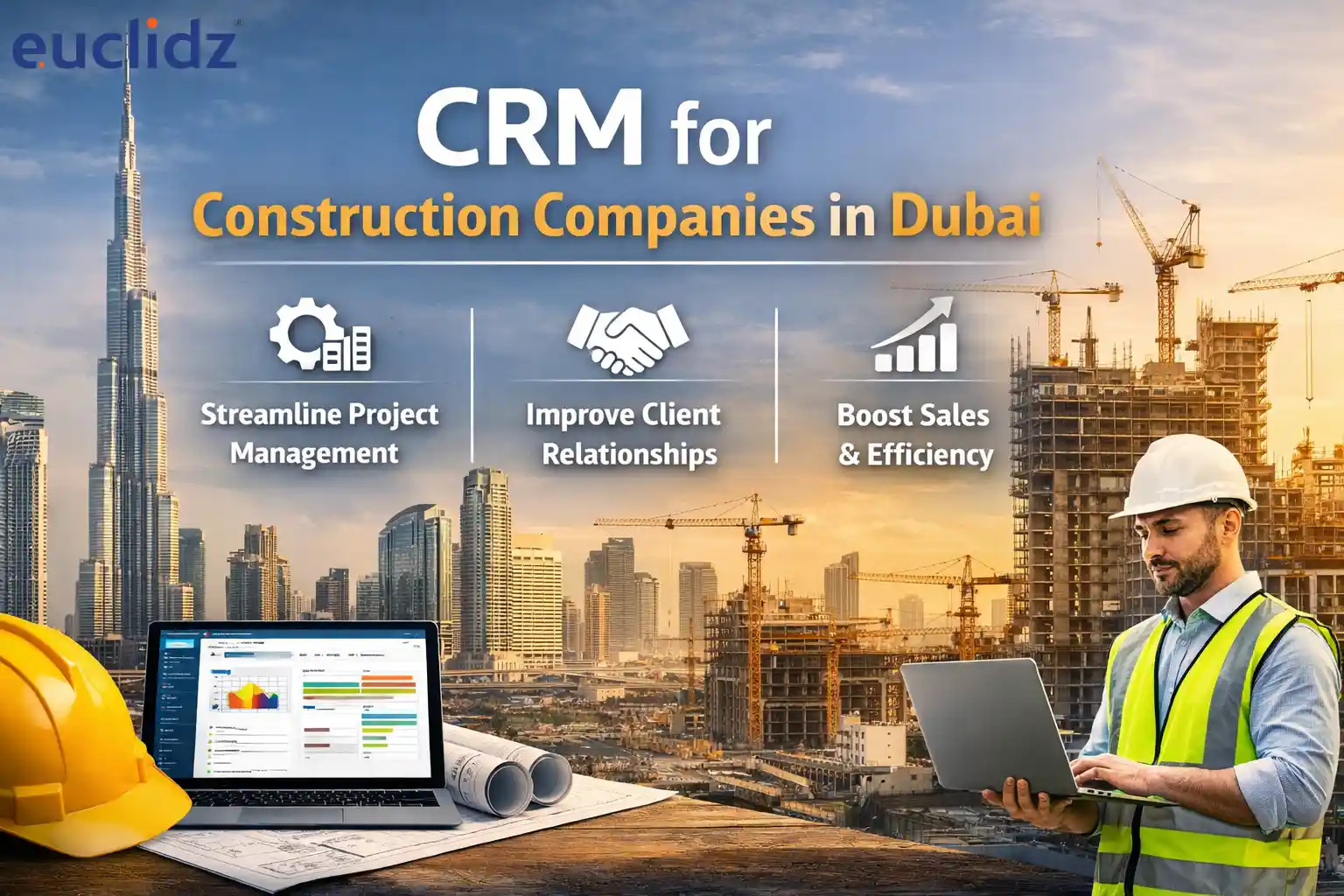
Construction companies manage large projects, multiple stakeholders, and strict timelines.
Client communication, lead tracking, and project updates often happen across different tools. Spreadsheets, emails, and messaging apps create fragmented data.
A Customer Relationship Management (CRM) system helps construction companies manage client information and project communication in one place.
CRM software centralizes client data, project communication, and sales pipelines. Construction firms gain visibility across projects and customers.
In fast-growing markets like Dubai, competition among contractors is high. Companies must respond to clients quickly, track opportunities, and manage multiple projects efficiently.
CRM systems provide that structure.
Businesses looking for scalable solutions often adopt crm software in dubai to connect sales, operations, and project teams in one platform.
Construction firms handle many interactions every day.
Developers, suppliers, subcontractors, and property buyers communicate constantly. Without a central system, information becomes scattered.
CRM software stores all interactions in one place.
This improves response time and prevents missed opportunities.
In a city like Dubai, where infrastructure projects and real estate development continue to expand, managing relationships efficiently becomes a major competitive advantage.
CRM also connects the sales pipeline with project execution.
A contractor can track the journey from first inquiry to project completion. That visibility improves decision making and revenue forecasting.
Construction companies receive leads from multiple channels.
Examples include:
Without a CRM system, these leads may remain untracked.
CRM platforms capture every lead automatically.
Teams can:
All client information remains centralized. This prevents communication gaps.
For construction firms managing high-value projects, organized communication directly improves conversion rates.
Construction sales cycles are long. A project may take months or years from proposal to contract.
CRM systems track every stage.
Typical stages include:
Managers gain clear visibility into the pipeline.
They can forecast revenue and prioritize high-value opportunities.
CRM dashboards also show which projects are delayed or require attention.
This structured tracking helps construction firms manage growth without losing control of project data.
Not all CRM systems are designed for construction companies. Industry-specific features improve usability and project management.
Construction CRM platforms combine sales tools with operational insights.
Important capabilities include:
Automation is another important feature.
CRM systems automatically send reminders for follow-ups, meetings, and project updates. This reduces manual work.
Teams spend less time managing spreadsheets and more time focusing on projects and clients.
Construction companies maintain relationships with many stakeholders.
Examples include:
CRM systems store all contact information in one database.
Each record includes:
Sales teams quickly access previous interactions. This improves client communication.
Companies also segment contacts by project type, industry, or region. Targeted marketing campaigns become easier.
Construction projects involve multiple teams.
Delays often occur because tasks are not clearly assigned. CRM software solves this with task automation.
Managers create workflows for each project stage.
Examples include:
Tasks are automatically assigned to team members. Notifications remind teams of upcoming deadlines.
Project managers monitor progress through dashboards. This visibility reduces delays and improves accountability across departments.
CRM adoption brings measurable improvements for construction companies.
The biggest advantage is visibility. All project data, leads, and communication appear in one system.
Decision makers no longer depend on scattered spreadsheets.
CRM also supports faster response times. Clients receive updates quickly, which strengthens trust.
In competitive markets like Dubai, strong client relationships often determine which contractor wins a project.
Construction projects require long-term collaboration. Developers and contractors work together for months or years.
CRM systems record every interaction.
This context improves conversations. Clients feel valued because the company remembers details about their requirements.
Over time, these relationships lead to repeat contracts and referrals.
Construction projects involve multiple departments.
Examples include:
Without a centralized system, communication gaps appear.
CRM systems connect all teams on one platform. Information flows easily between departments.
Once a sales team confirms a project, project managers instantly access the details. This reduces misunderstandings and speeds up project initiation.
Sales pipelines in construction differ from typical industries. Deals involve larger budgets and longer timelines.
CRM software helps companies manage this complexity. The system records each stage of the sales journey.
Managers track which opportunities are likely to convert. They also analyze which marketing channels produce the best leads.
This data helps construction firms allocate resources more effectively.
CRM dashboards display the full pipeline.
This visibility improves forecasting. Companies can estimate revenue months in advance.
Sales teams also identify stalled opportunities. Follow-ups become faster.
Construction firms collect large amounts of data.
Examples include:
CRM platforms transform this data into reports. Managers analyze trends and identify growth opportunities.
These insights help companies plan future strategies.
Selecting the right CRM requires evaluating several factors. Construction companies need systems that support complex workflows.
Key evaluation points include:
Cloud-based systems are becoming the standard. They allow teams to access project data from construction sites, offices, or mobile devices.
Cloud CRM solutions offer several advantages.
Cloud platforms also scale easily as the company grows.
Every construction company has different workflows. Standard CRM systems may not fully match operational needs.
Customization solves this problem. CRM developers adapt the system to match construction processes.
Euclidz Technologies provides CRM solutions tailored for construction companies.
Their implementation approach focuses on aligning technology with operational workflows.
Construction firms receive systems that support project tracking, sales management, and customer communication.
Every construction business operates differently. Euclidz Technologies customizes CRM systems based on specific requirements.
CRM platforms work best when integrated with other tools.
This integration eliminates duplicate data entry. Information flows automatically across systems.
Construction companies gain a unified view of clients, projects, and financial performance.