 EuclidzEuclidz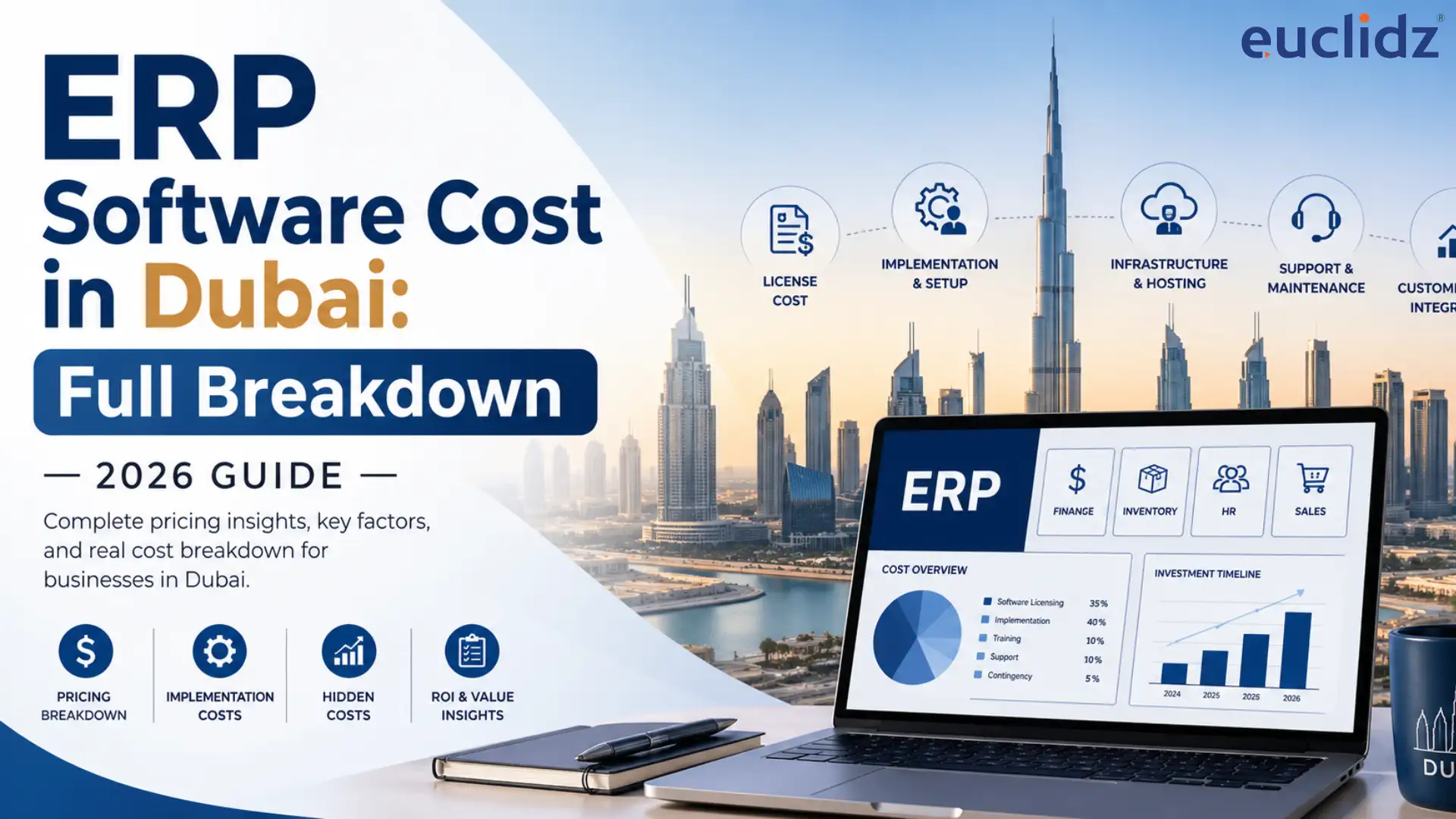
ERP software is one of the most important technology investments for modern businesses.
In Dubai , ERP pricing varies widely based on company size, industry, deployment model, and customization needs.
Some businesses spend AED 15,000.
Others invest AED 1 million or more.
Understanding the full cost helps you budget correctly and avoid surprises.
This guide explains everything.
If you are considering ERP Software in Dubai , this article will help you make a smarter decision.
ERP pricing is not fixed.
Every business has different needs.
A retail company may need inventory, POS, and CRM.
A manufacturing company may require production planning, procurement, and quality control.
Pricing depends on several factors:
Dubai businesses also face industry-specific compliance requirements.
VAT management, payroll rules, and local reporting standards can increase implementation costs.
Vendor reputation also matters.
Established ERP providers often charge higher fees but deliver better long-term value.
Cheaper solutions may appear attractive initially.
However, poor implementation can lead to operational issues, data loss, and additional expenses later.
A proper ERP investment focuses on total business value, not just software price.
That is why cost comparisons should always include licensing, implementation, support, and future scalability.
ERP software pricing in Dubai typically falls into three categories.
Business size is the biggest cost driver.
Small businesses usually spend between AED 15,000 and AED 80,000.
This range covers:
Cloud ERP is the preferred option.
It reduces infrastructure costs and speeds up deployment.
Most SMEs choose subscription-based pricing.
Monthly fees often range from AED 500 to AED 2,500 per user.
Implementation generally takes 4 to 8 weeks.
This makes ERP accessible even for startups and growing businesses.
Mid-sized companies typically invest AED 80,000 to AED 400,000.
They require:
Customization becomes more common.
Integration with third-party applications also increases costs.
Implementation usually takes 3 to 6 months.
Large enterprises often spend AED 500,000 to AED 5 million.
Complex requirements drive pricing higher.
These include:
Enterprise implementations can take 6 to 18 months.
Several variables influence ERP pricing.
Understanding them prevents budget overruns.
Cloud ERP uses a subscription model.
You pay monthly or annually.
Lower upfront cost.
Higher long-term operating expense.
Higher initial investment.
Lower recurring fees.
Choose based on cash flow and business strategy.
ERP pricing usually scales per user.
More users mean higher subscription or licensing fees.
Role-based licensing can help reduce costs.
Not every employee needs full access.
Standard ERP implementations cost less.
Custom workflows, reports, and modules increase both cost and timeline.
Avoid unnecessary customization.
Best practice processes often work better.
Manufacturing, construction, healthcare, and logistics usually require advanced modules.
These industries often have higher implementation costs.
Regulatory compliance adds another layer.
Software licensing is only part of the investment.
Hidden costs can significantly impact your budget.
Common overlooked expenses include:
Many businesses underestimate internal resource allocation.
Your team will spend time on testing, training, and process mapping.
Downtime during transition can also affect productivity.
A realistic ERP budget should include a 15% to 20% contingency fund.
This protects against scope changes and unexpected requirements.
Proper planning avoids unpleasant surprises later.
Cloud ERP dominates the Dubai market in 2026.
It offers lower entry costs.
Advantages:
Typical cost:
Best for:
Advantages:
Typical cost:
Additional expenses:
Best for:
Cloud ERP usually delivers faster ROI.
Implementation costs often exceed software licensing.
A typical cost breakdown looks like this:
Project duration depends on complexity.
Rushed implementations often fail.
Proper discovery and planning are essential.
Businesses should define clear objectives before selecting a vendor.
This reduces scope creep and accelerates deployment.
Price should never be the only factor.
Evaluate vendors based on:
Ask important questions:
A strong local partner can dramatically improve project success.
This is especially important for UAE compliance and support.
Euclidz Technologies provides tailored ERP solutions for businesses across Dubai and the UAE
Key advantages include:
Whether you run a startup, SME, or enterprise, Euclidz delivers solutions aligned with your business goals.
Their team helps reduce implementation risk while maximizing ROI.
If you are looking for reliable ERP Software in Dubai, Euclidz is a trusted partner.
ERP software is a strategic investment.
In Dubai, costs range from AED 15,000 for small businesses to several million dirhams for enterprises.
The right solution depends on your:
Focus on total value, not just initial cost.
A well-implemented ERP system improves efficiency, visibility, and profitability.
Before making a decision, consult an experienced local provider.
The right ERP can transform your business for years to come.